OUR SERVICESDental Implant
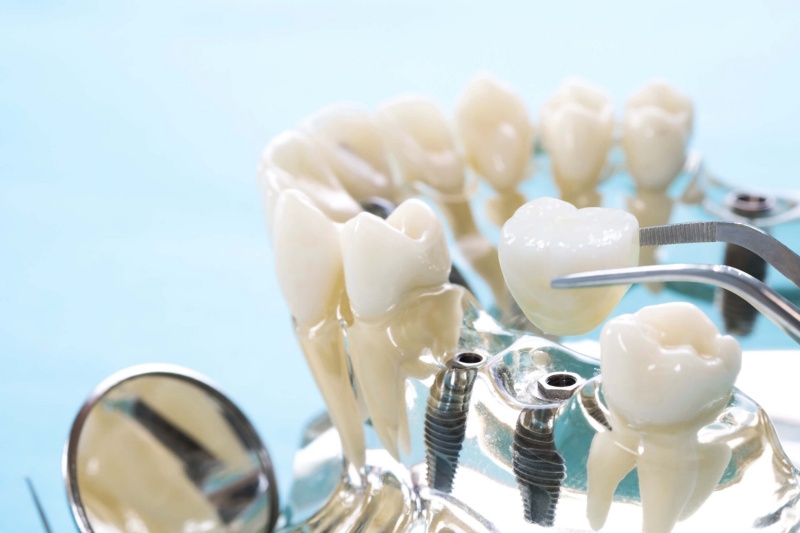
What Are Dental Implants? Everything You Need to Know Before Getting One
Dental implants are an excellent treatment option for individuals facing oral health issues, particularly those who have lost one or more teeth. This method provides a seamless and natural replacement, allowing you to enjoy your meals again with ease and confidence.
Tooth loss is more than just an oral health issue—it can significantly impact daily life and self-confidence. That’s why dental implants have become a popular choice for restoring both functionality and aesthetics in a natural way.
Before deciding on dental implant treatment, The Tooth Club would like to guide you through understanding this procedure. Learn what dental implants are, the different types available, which dental issues they are best suited for, and how to care for yourself before and after the procedure.
What Are Dental Implants?
Dental implants are artificial tooth roots designed to replace the natural roots of teeth that have been lost. These implants are shaped like screws and are surgically placed into the jawbone to provide a stable foundation. Unlike removable dentures, dental implants are a permanent solution, often referred to as “fixed prosthetic teeth.”
Most dental implants are made from titanium, a material that is highly compatible with the human body. Over time, the implant integrates seamlessly with the surrounding tissue and bonds with the jawbone, resulting in a natural and durable outcome that closely resembles real teeth.
Who Can Get Dental Implants?
- Individuals with missing or damaged teeth: For those who have lost teeth or have damaged teeth, such as chipped, cracked, or loose teeth, dental implants are a natural and permanent solution. The implant replaces the lost tooth root, and a crown is placed on top, allowing the tooth to function normally again.
- Those who do not want temporary dentures: Temporary dentures are often easy to lose, uncomfortable, and do not feel like natural teeth. They are also difficult to maintain. Dental implants, on the other hand, offer a permanent replacement for missing teeth and are a more convenient and reliable option.
- People who want to design their smile or boost their confidence: Dental implants allow you to design the shape and appearance of your teeth, giving you the opportunity to create the smile you’ve always wanted. This is ideal for those looking to enhance their smile and boost their self-confidence.
- Those who do not want braces: Dental implants are suitable for both adults and teenagers, particularly for those who need to address dental issues but do not want to undergo braces. Unlike braces, which take time and come with high costs, dental implants can provide immediate results, appear natural, and are easy to care for, just like real teeth.
Limitations and Precautions for Dental Implants
- Age Requirement: Individuals should be at least 18 years old to ensure that the jawbone has fully developed.
- No Blood Clotting Issues: Candidates must not have any problems with blood clotting, as it can affect the healing process.
- No Serious Medical Conditions: Certain health conditions may interfere with the success of dental implants, including:
- Poorly controlled diabetes (particularly those who cannot manage blood sugar levels effectively)
- Cancer patients undergoing radiation treatment in the facial or jaw area
- Osteoporosis or other bone-related issues that affect bone density
- Severe periodontal disease
- Leukemia, hyperthyroidism, or individuals on immune-suppressing medications
- Smoking: Heavy smoking can increase the risk of infection and complications after implant surgery, potentially affecting healing.
What Happens If We Don’t Replace a Lost Tooth?
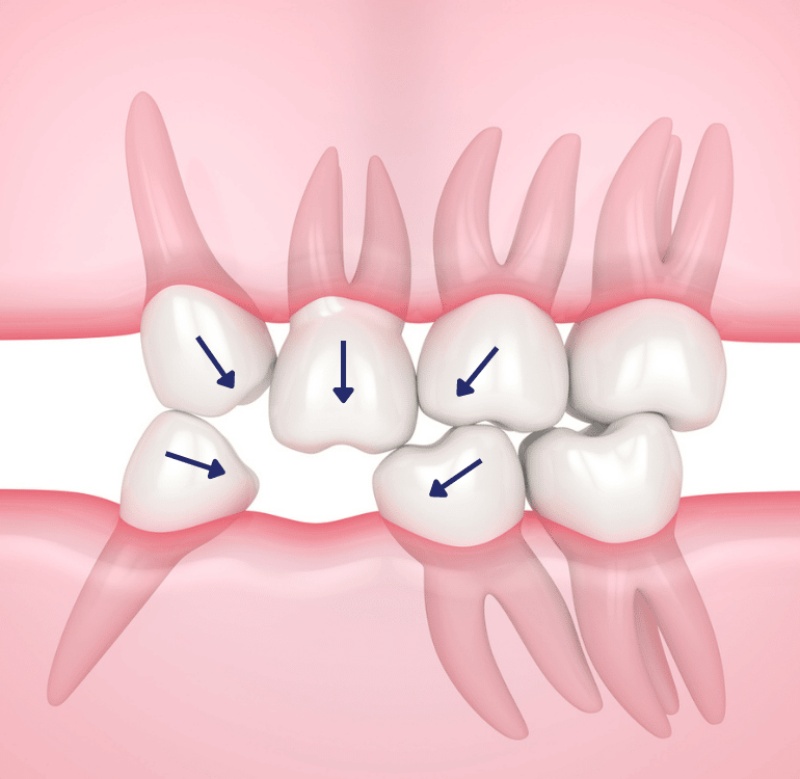
If a tooth is extracted and not replaced, it can lead to significant problems over time. Normally, our teeth are constantly shifting, though we may not always notice it. Here are some issues that may arise if a lost tooth is not replaced:
- Adjacent teeth may shift, tilt, or fall out: If left untreated, this can cause more teeth to be lost, possibly leading to multiple teeth being affected.
- Improper bite alignment: This can lead to problems with the jaw joint, causing discomfort and issues with chewing.
- Changes to facial structure: The absence of a tooth can affect the overall shape of the face, leading to a sunken or uneven appearance.
- Increased pressure on remaining teeth: Without a replacement tooth, more pressure is placed on the remaining teeth, which could result in them becoming more prone to cracking, chipping, or breaking due to excessive force.
Therefore, it is highly recommended to replace a lost tooth, whether with a dental implant, bridge, or even dentures, to avoid further complications down the road.
What Are the Different Types of Dental Implants?
Dental implants can be classified into three types based on the procedure:
- Conventional Implant
This is the traditional method of dental implants. After a tooth is extracted, you typically wait about 3-6 months for the extraction site and jawbone to heal fully. Then, the implant is placed into the bone, followed by another waiting period of 3-6 months for the implant to fuse with the bone. After this period, a crown or bridge can be placed on the implant. This method results in a strong and stable restoration, though the treatment duration depends on the individual’s oral health and jawbone condition.
- Immediate Implant Placement
In this method, the implant is placed immediately after tooth extraction. After placement, the healing period is approximately 3-6 months, allowing the implant to integrate with the bone. Once healed, a crown or bridge is placed. This procedure depends on the dentist’s assessment of whether the patient’s oral health is suitable for immediate placement. It’s important to ensure that the oral conditions are healthy enough to support the implant.
- Immediate Loaded Implant
This method involves placing the implant and attaching the crown or bridge immediately after tooth extraction. It’s a faster, more convenient procedure as it reduces the waiting time for additional steps and minimizes the number of visits. The implant is placed and restored in a single session, allowing for quick results. However, this method requires a highly skilled dentist, as the procedure must be carefully planned and evaluated to ensure its effectiveness.
The cost of dental implants varies depending on the clinic or facility. It’s recommended to inquire about the price with the clinic staff or consult with the dentist managing your case before proceeding with the treatment.
Types of Dental Implants
There are 6 types of dental implants, each with its unique procedure and benefits:
- Single Implant
This involves placing a single implant to replace one lost tooth. It is ideal for individuals who have lost only one tooth. The dentist uses a screw-like implant and a single crown, which is securely fixed in place. There is no need to grind down adjacent teeth to place a bridge. It is easy to clean and use immediately after the procedure.
- Multiple Implant
This procedure is for patients who have lost multiple teeth in the same area. A bridge is placed to cover the missing teeth, and the dentist will determine how many implants are necessary based on the patient’s jawbone condition and available space.
- One Day Implant
This method allows for the extraction of a tooth, placement of an implant, and attachment of a temporary crown all within the same day. Unlike the conventional implant, which requires healing time for the bone and gums, the One Day Implant offers immediate functionality with a temporary crown while the permanent restoration heals.
- Implant Supported Bridge
This involves using multiple implants to support a bridge that replaces two or more adjacent missing teeth. It is suitable for patients who have lost several consecutive teeth. The dentist will evaluate the jaw structure and bone volume to determine the exact number of implants needed.
- Implant Over Denture
This approach involves placing multiple implants across the jaw to support a full set of fixed dentures or a complete bridge. It is ideal for individuals who have lost all their teeth in one or both jaws and want a stable, non-removable solution that offers more comfort than traditional removable dentures.
- All on 4
This procedure involves placing four implants in the jawbone to support a full set of fixed dentures or a bridge. It is perfect for those who have lost all their teeth in either the upper or lower jaw and want a secure, effective solution that performs better than removable dentures.
These types of implants provide flexible options depending on the patient’s needs, and it’s best to consult with a dentist to determine which type is most suitable for your condition.
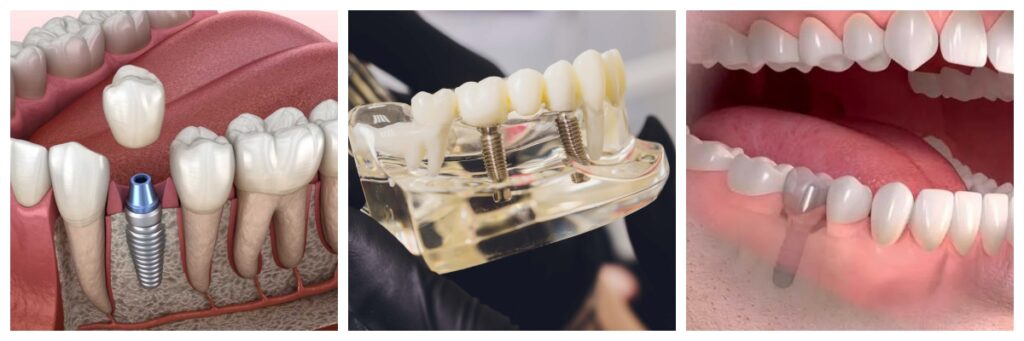
Photo: Single Implant / Multiple Implant / One day Implant
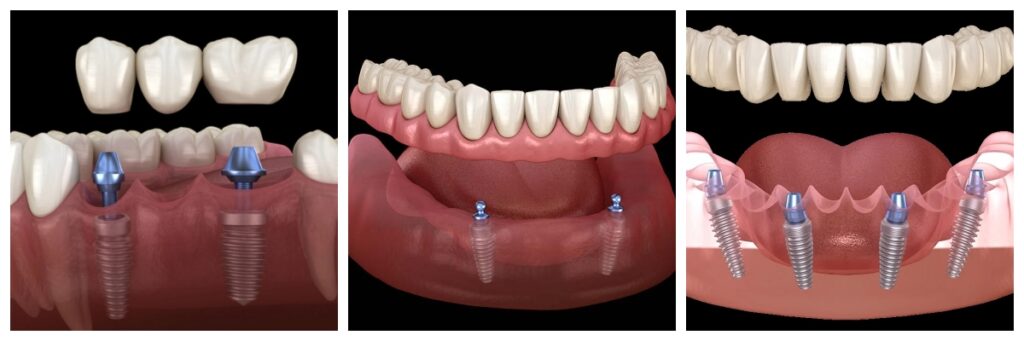
Photo: Implant Support Bridge / Implant Over Denture / All on 4
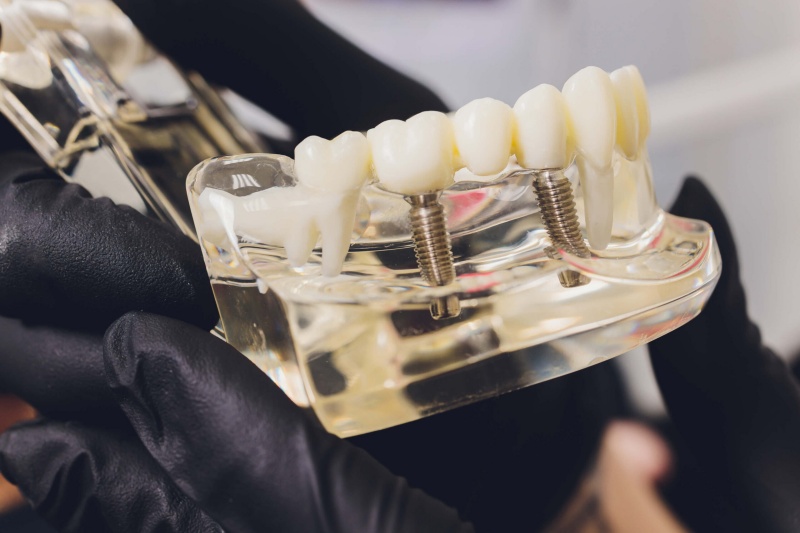
Components of a Dental Implant
A dental implant consists of three main parts:
- Screw: This is the part that is embedded under the gum. It is a titanium screw that serves as the root of the implant, anchoring the artificial tooth securely by being embedded into the jawbone.
- Abutment: This component sits between the implant screw and the crown. It acts as a structure to support the crown and is typically attached to the screw with another smaller screw.
- Crown: The crown is the visible part of the tooth and is made from ceramic. It is designed to replicate the appearance and function of a natural tooth, enabling it to chew food properly.
How Dental Implants Work
Dental implants work in collaboration with the jawbone. Once the implant integrates with the bone, it provides stable support for the artificial tooth. This ensures that the replacement tooth or dental prosthesis attached to the implant stays securely in place, especially during speaking and chewing.
The placement of the implant allows for the attachment of dentures, crowns, and other prosthetic devices to the implant itself, offering a much more natural feeling than traditional removable dentures or prosthetics. The integration of the implant with the bone provides enhanced stability and function, making it feel almost identical to natural teeth.
Dental Implant Placement
The dentist will first administer a local anesthetic to numb the area. Then, a small incision will be made to place the implant into the jawbone, and the incision will be stitched up. After about 7-14 days, the stitches will be removed. Following this, there will be a waiting period of about 3-6 months to allow the dental implant to fuse with the jawbone.
However, if the patient opts for an Immediate Loaded Implant or a permanent implant procedure with the crown placed in one session, the healing phase can be skipped. This means the implant and crown can be placed together right away, without the need to wait several months. After surgery, the patient can immediately begin their recovery.
At The Tooth Club, patients can feel assured that the procedure will not be painful or scary, and that the recovery process will not be too long. Our dentists are skilled and gentle, using advanced tools for minimally invasive surgery. In some cases, stitches may not even be necessary. As a result, patients experience less pain and a shorter recovery time.
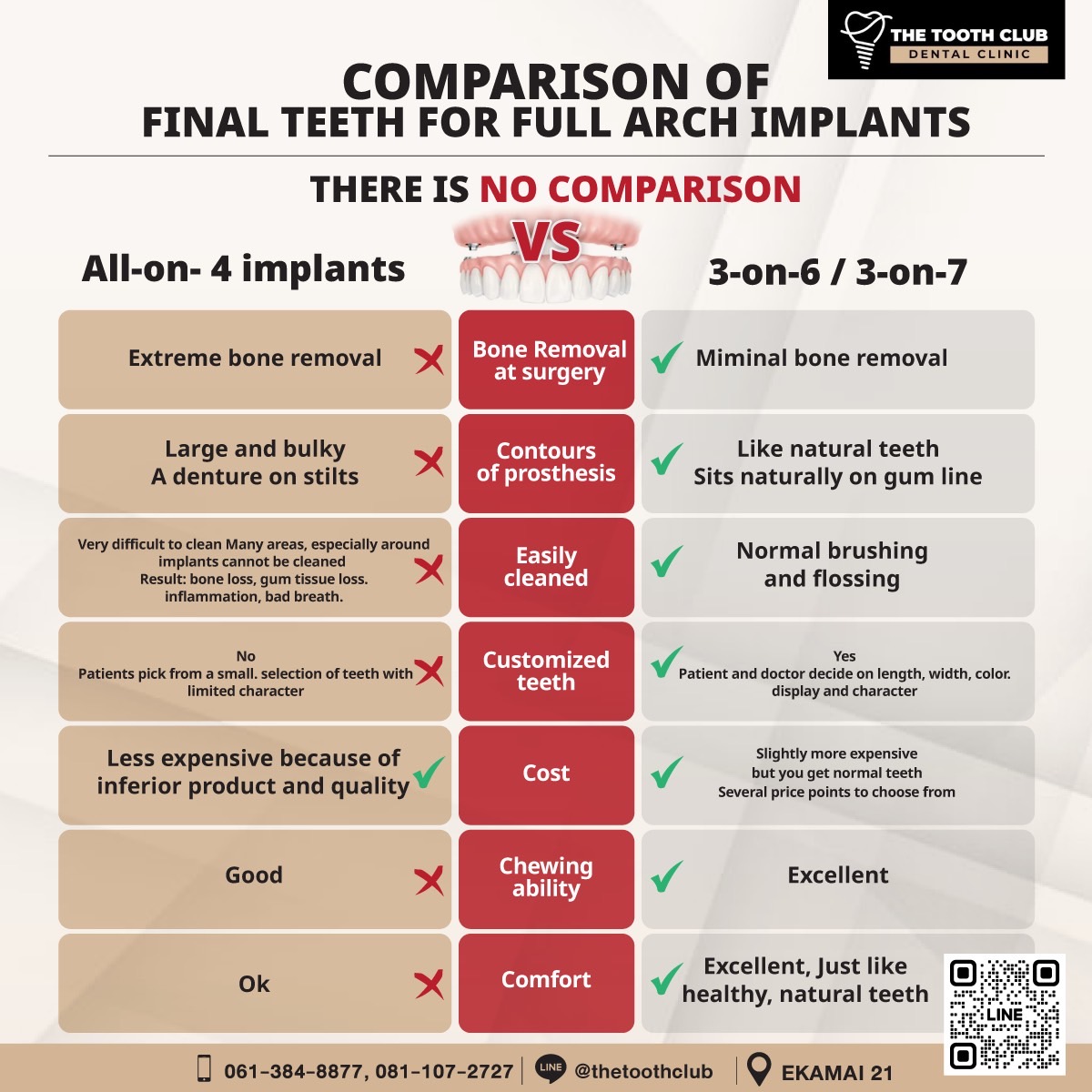
Steps in Dental Implant Procedure
Dental implants or permanent dentures involve the placement of an artificial root (implant) and a crown to replace damaged or missing teeth. The procedure is detailed and involves several steps:
- Oral Examination:
The dentist will perform a thorough check of the mouth. This includes X-rays and a CT scan to assess the bone density and soft tissue around the gums. In some cases, impressions of the teeth are made to aid in planning and positioning the implants.
- Preparation:
If there are any infections or issues within the mouth, such as gum disease, these need to be treated first. This process can take anywhere from 2 weeks to 2 months.
- Placement of the Implant:
After ensuring the area is ready, the dentist administers local anesthesia and drills a small hole in the jawbone to place the implant. The area is then stitched up, and the healing process begins. This stage takes approximately 3-6 months for the implant to fully integrate with the bone.
- Attachment of the Abutment:
Once the implant is stable, a metal abutment is attached to support the crown or bridge. This acts as a connector between the implant and the dental restoration.
- Placement of the Crown or Bridge:
Finally, the dentist places a customized crown or bridge on the abutment. This step involves creating molds and analyzing the bite, ensuring the restoration fits naturally. Once everything is in place, the process is complete.
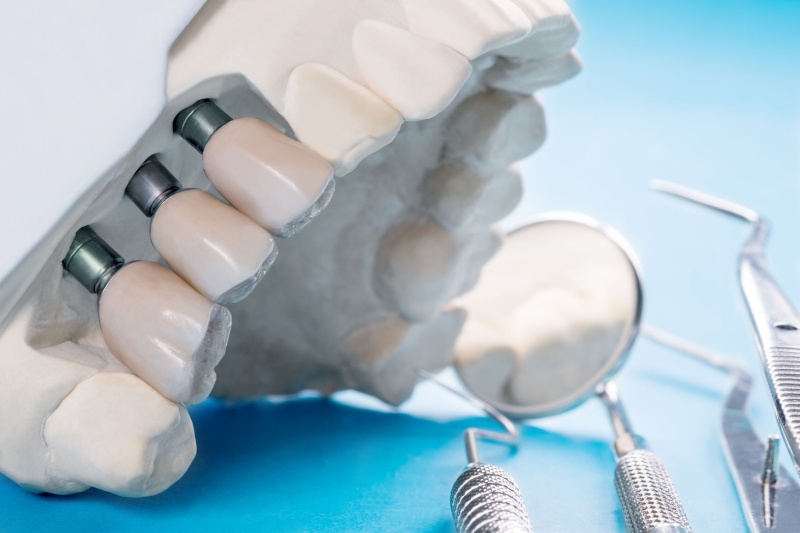
Self-Care After Dental Implant Surgery
Here are the immediate aftercare guidelines to follow after getting dental implants to ensure proper healing and minimize the risk of complications:
- Avoid chewing on the treated side:
Follow the dentist’s instructions regarding when to avoid chewing on the side where the implant was placed.
- Do not rinse your mouth vigorously:
For the first day after surgery, avoid rinsing your mouth too forcefully as it could disrupt the blood clot and prolong bleeding.
- Take prescribed medication as directed:
Ensure that you follow the dentist’s medication schedule, including antibiotics and pain relievers, to prevent infection and manage any discomfort.
- Maintain oral hygiene:
Keeping your mouth clean is crucial. Use a soft-bristled toothbrush to avoid disturbing the surgical site and keep the area clean. Gently clean your teeth and gums but avoid brushing directly on the surgical site for the first few days.
- Avoid actions that could stress the implant:
Refrain from eating hard foods or engaging in heavy physical activity that could put stress on the implant or cause trauma to the surgical site.
- Manage swelling:
It’s common to experience swelling after the procedure. Applying an ice pack to the outside of your face near the surgery site can help reduce swelling. Avoid holding ice in your mouth as it can cause damage to the surgical area.
- Steer clear of certain foods:
Avoid consuming foods that are spicy, sour, very hot, or hard to chew. These types of foods can irritate the area and delay healing.
Self-Care After Dental Implants for Long-Term Success
To ensure that your dental implant lasts for many years, it’s important to follow proper care and maintenance practices. Here are key tips to keep your implant in good condition:
- Avoid hard or sticky foods:
Steer clear of foods that are hard, sticky, or chewy, as these can potentially dislodge or damage your implant. Stick to softer foods that won’t put excessive pressure on the implant.
- Limit intense physical activities:
Refrain from strenuous exercise or activities that may lead to impacts or forceful motions that could damage the implant or cause it to become dislodged. Be cautious about accidents or blows to the face.
- Avoid smoking and alcohol:
Smoking and excessive alcohol consumption can negatively affect the healing process and long-term health of your implant. These habits can lead to gum disease, bone loss, and implant failure, so it’s best to quit or reduce these habits.
- Maintain good oral hygiene:
Continue with regular brushing and flossing to keep your gums and teeth healthy. Use a soft-bristled toothbrush to avoid irritating the area around the implant. Don’t forget to visit your dentist regularly for check-ups and professional cleanings to ensure the implant stays in top condition.
How to Care for Dental Implants?
- Brush your teeth at least twice a day and floss regularly.
- Avoid chewing hard or solid foods.
- Follow the dentist’s instructions strictly
- Visit the dentist for regular check-ups, preferably every 6
FAQs
- Can dental implants be done in one day?
Answer: As mentioned, there are different types of dental implants. The procedure depends on your oral health, including the strength of your bones, whether you smoke, any existing health conditions, and which type of implant is suitable for you. It is best to consult with a specialist to create a proper treatment plan.
- Is it better to get a dental implant or dentures?
Answer: Generally, when a person loses a natural tooth, it causes gaps that can lead to difficulty in chewing and may cause other teeth to shift. You can consult a dentist directly to determine which treatment is more suitable for you.
- Should I get braces or dental implants if I want a beautiful smile?
Answer: Braces are used to align teeth and improve their appearance, while dental implants replace lost teeth. If you want a beautiful smile, it is recommended to first get braces and then proceed with implants as the next step. However, there are cases where a dentist might suggest getting implants first to help secure the teeth for the braces. It is best to consult with your dentist to create the right treatment plan.
- How long do dental implants last?
Answer: The lifespan depends on individual use, but typically dental implants last between 10 to 20 years, or even longer with proper care and maintenance.
- Does getting a dental implant hurt?
Answer: There is no pain during the procedure. At THE TOOTH CLUB, our dentists are gentle, and the procedure is done under local anesthesia with minimal pain, a small incision, and a short recovery time. With over 15 years of experience, you can feel confident throughout the process.
- Should I get braces or dental implants first?
Answer: It is important to understand that braces align your teeth, while implants replace lost teeth. If teeth are severely misaligned, the dentist will typically recommend getting braces first to make space for the implants. It’s best to consult your dentist for the most suitable plan.
- What is sinus lift surgery in relation to dental implants?
Answer: Sinus lift surgery is a procedure to lift the sinus membrane. The dentist creates an opening in the upper jaw and lifts the sinus lining, filling the space with bone grafts to increase bone volume for dental implants. This ensures the implants are stable and can handle chewing forces effectively.
- What should I do if I don’t have enough bone for dental implants?
Answer: The solution is bone grafting, which can improve bone height and thickness. This procedure can be done at the same time as the dental implant surgery, and your dentist will advise you on the best course of action.
- How can I prevent bone loss in the tooth socket?
Answer: It is recommended to perform Socket Preservation immediately after tooth extraction. This procedure helps preserve the bone structure and maintain the gum’s shape, making it ideal for future implant placement.
- How much do dental implants cost?
Answer: The price generally starts at 30,000 Baht and may increase depending on the severity of the dental issue, as assessed by the dentist.
- Where is the best place to get dental implants?
Answer: Choose a clinic that meets high standards, offers comprehensive services, and employs experienced specialists with modern equipment. If you are unsure about where to go, you can consult with THE TOOTH CLUB, a clinic with over 15 years of experience, ensuring reliable treatment with no hidden fees.


 OPEN: 10.00 AM – 8.00 PM