What is Tooth Extraction, and Why Is It Necessary? What Happens If You Don’t Have It Done?
Although tooth extraction may sound frightening, it is not as concerning as many think. In fact, it is one of the most effective ways to maintain oral health and address dental problems that could potentially worsen.
Just the thought of a tooth extraction can cause a twinge of discomfort, and we completely understand the concerns of patients facing this procedure. Common questions often arise, such as whether the extraction will be painful, what to do after a tooth is removed, whether to leave the space empty, and how to care for yourself afterward.
At The Tooth Club, we’ve gathered everything you need to know about tooth extraction to help ease your worries and provide you with a clearer understanding of the process.
Why is Tooth Extraction Important and When is it Necessary?
Tooth extraction is an essential part of maintaining oral health. After a dentist diagnoses a problematic tooth that cannot be treated with other dental procedures or poses a risk of severe infection spreading, extraction is considered. If left untreated, the problem could affect overall oral health and other surrounding teeth.
Here are some common reasons why tooth extraction may be necessary:
- Tooth Decay:
If a tooth is severely decayed and has spread into the nerve of the tooth, it may no longer be treatable with fillings or root canal therapy. Leaving it untreated could spread the decay to adjacent teeth, making extraction the best option.
- Gum Disease:
In cases of gum disease, such as periodontitis caused by bacterial buildup, inflammation, gum recession, and tooth sensitivity, a tooth may need to be extracted if it can no longer be saved.
- Trauma or Accident:
If a tooth is severely damaged from an accident or injury and cannot be repaired through other dental treatments, extraction may be necessary.
- Orthodontic Treatment:
In orthodontic cases, a dentist may recommend extracting one or more teeth to create space for proper alignment of the remaining teeth, ensuring a beautiful smile without future problems.
- Impacted Teeth:
Impacted teeth, such as wisdom teeth, may not emerge properly and could lead to other complications. In such cases, the dentist may recommend extraction to prevent future issues.
These are just a few of the common situations where tooth extraction may be required to safeguard your oral health.
What Are the Different Methods of Tooth Extraction and Which Is the Best?
Tooth extraction methods vary depending on the condition of the tooth. Here are three common techniques:
- Extraction Using Forceps (Forceps Method):
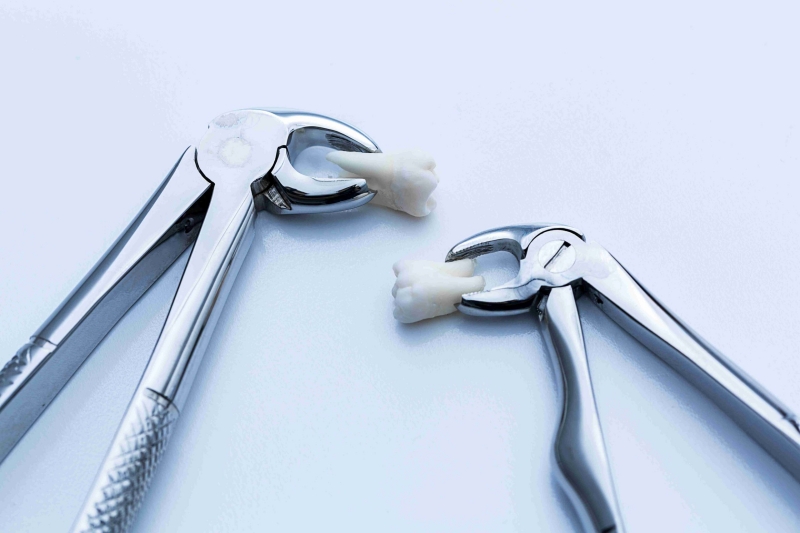
This is the most common method, ideal for teeth with significant remaining structure and normal roots. The dentist gently rocks the tooth back and forth using forceps until it is loosened and can be removed.
- Extraction Using an Elevator (Elevator Method):
An elevator is a dental tool used to lever the tooth out, often in conjunction with forceps. This technique is typically used for extracting third molars (wisdom teeth), both upper and lower. The dentist uses controlled force to gently loosen the tooth before removal.
- Tooth Division (Tooth Division Method):
This method involves removing the tooth in pieces, either through an open technique (where the gum is cut open) or trans-alveolar (where the gum is not cut). This is recommended for patients with severely decayed teeth, abnormal roots, or teeth with multiple roots, making it difficult to extract the tooth as a whole using forceps.
How to Prepare for a Tooth Extraction?
- Provide a Complete Health History to Your Dentist:
Inform your dentist of any medications you are currently taking, any allergies, existing health conditions, vitamins, and any future dental plans. This helps the dentist create the most appropriate treatment plan for your needs.
- Notify Your Dentist If You Have Specific Health Conditions:
If you have conditions like diabetes, a history of easy or slow bleeding, seizures, high blood pressure, asthma, heart disease, leukemia, kidney disease, have taken blood thinners, or have had heart valve replacement, it’s crucial to inform your dentist beforehand. In some cases, extraction may not be recommended.
- Eat a Meal and Clean Your Mouth:
It’s best to eat a light meal before your appointment, as this helps maintain your energy levels. Also, ensure your mouth is clean by brushing and flossing your teeth to reduce the risk of infection.
- Get Adequate Rest:
A good night’s sleep before your appointment will help ease any anxiety and ensure you’re physically prepared for the procedure.
Steps for Tooth Extraction:
- Confirm the Treatment Plan with the Patient: The dentist will review the treatment plan and confirm which tooth is to be extracted during the procedure.
- Administer Local Anesthesia: The dentist will inject local anesthesia around the tooth to be extracted. The patient will wait for about 5 minutes, or until the anesthesia takes effect.
- Extract the Tooth: The dentist will carefully and gently extract the problematic tooth. The extraction is performed with precision to ensure minimal discomfort.
- Apply Gauze to Stop Bleeding: After the tooth is removed, the dentist will place sterile gauze over the extraction site to help stop the bleeding. In some cases, stitches may be required, depending on the dentist’s assessment.
- Bite Down on the Gauze: The patient will be asked to bite down on the gauze for approximately 30-60 minutes to ensure bleeding stops.
- Provide Post-Extraction Care Instructions: The dentist will give the patient instructions on how to care for themselves after the extraction to promote healing and prevent complications.
Post-Tooth Extraction Care:
- Bite Down on Gauze to Stop Bleeding: After the extraction, bite firmly on the gauze placed over the extraction site to help control bleeding.
- Apply Ice Pack for Pain and Swelling: Apply an ice pack to the affected area for 15-30 minutes to reduce pain and swelling.
- Take Pain Relievers as Recommended: If you experience pain after the anesthesia wears off, take pain medication as prescribed by your dentist.
- Avoid Using Your Tongue to Touch the Wound or Suck on the Area: Do not disturb the extraction site with your tongue or by sucking, as this can dislodge the blood clot and cause complications.
- Do Not Rinse Your Mouth for the First 12 Hours: Avoid rinsing your mouth for the first 12 hours after the extraction to prevent disrupting the blood clot.
- Avoid Using a Straw for the First Week: Do not use a straw for at least one week, as the suction can cause the blood clot to dislodge.
- Avoid Brushing the Affected Area for 1-2 Days: For the first 1-2 days, avoid brushing the side of your mouth with the extraction site. After that, brush gently to prevent the wound from reopening.
- Avoid Spicy, Hot, or Acidic Foods for the First 2-3 Days: Refrain from eating spicy, hot, or acidic foods for the first 2-3 days as they can irritate the wound and delay healing.
How much does tooth extraction cost?
The cost of tooth extraction depends on factors such as the location of the tooth, its size, positioning, and any underlying issues that require extraction. Typically, the price for a standard tooth extraction starts around 900-1,000 Baht.
Where should you have a tooth extraction?
- A clinic near your home: If you have a dental issue, visiting a nearby clinic will ensure prompt treatment to prevent any problems from worsening and becoming difficult to treat.
- Choose a trusted dentist: One of the main reasons people avoid seeing a dentist is a lack of trust, fear of pain, and anxiety about treatment. However, at The Tooth Club, a comprehensive dental clinic, your fears will be eased. Our team of experienced dentists is skilled in treating all dental issues with gentle hands, knowledge, and attention to detail. Every step of the treatment will be discussed with you to ensure a clear and accurate treatment plan, using safe and standard dental equipment to provide the best care experience for all patients.
FAQs
- Can tooth extraction be covered by social security?
Answer: Yes, it can. Tooth extraction is a medical procedure, and the Social Security Office provides a budget for dental treatments of up to 900 THB per year. To be eligible, the insured person must have paid contributions for at least 3 months.
- How long does tooth extraction take? How many days is the recovery period?
Answer: Once the anesthesia takes effect, the dentist will extract the problematic tooth, and the procedure typically takes only a few minutes. After extraction, the patient will need about a month for the wound to fully heal. In the first 12 hours, patients may experience pain and tightness as the anesthesia wears off, but this discomfort usually subsides within a day.
- What can I do if I don’t want a gap after tooth extraction?
Answer: After the extraction, to prevent adjacent teeth from shifting or causing further oral health issues, it is advisable to quickly replace the missing tooth. This can be done with various dental options such as implants, bridges, or dentures. The most suitable option will depend on the dentist’s professional judgment.


 OPEN: 10.00 AM – 8.00 PM